Today, we’re taking a deep dive into strategic insights that can help businesses identify opportunities and develop offerings that truly meet the needs of this market segment.
1. Who Are Your Customers?: Understanding the Myanmar Population in Thailand
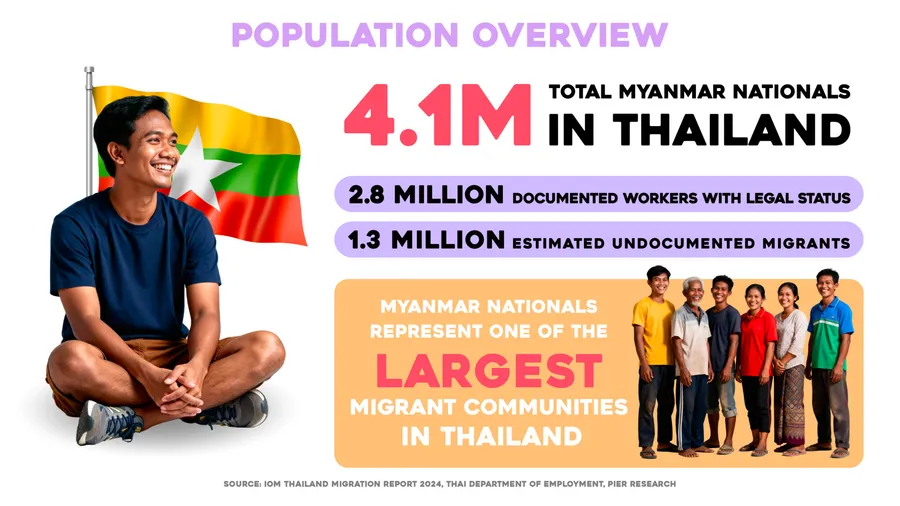
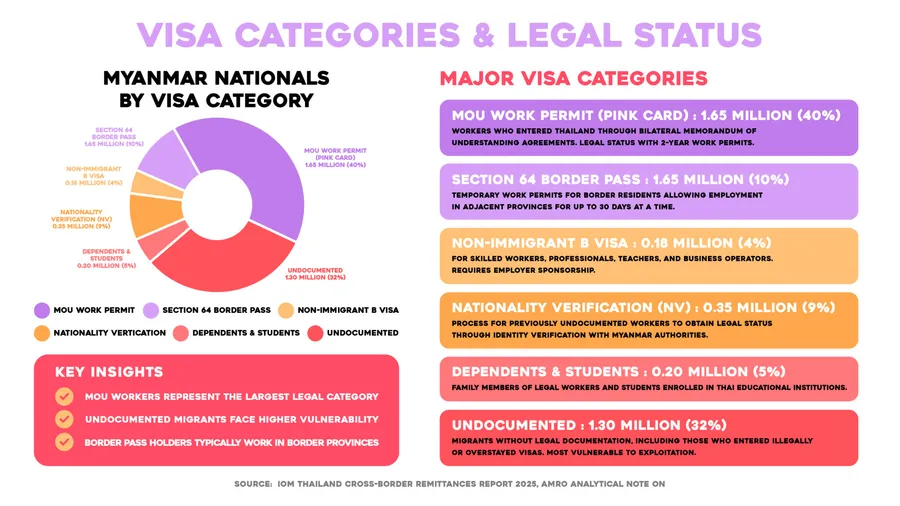
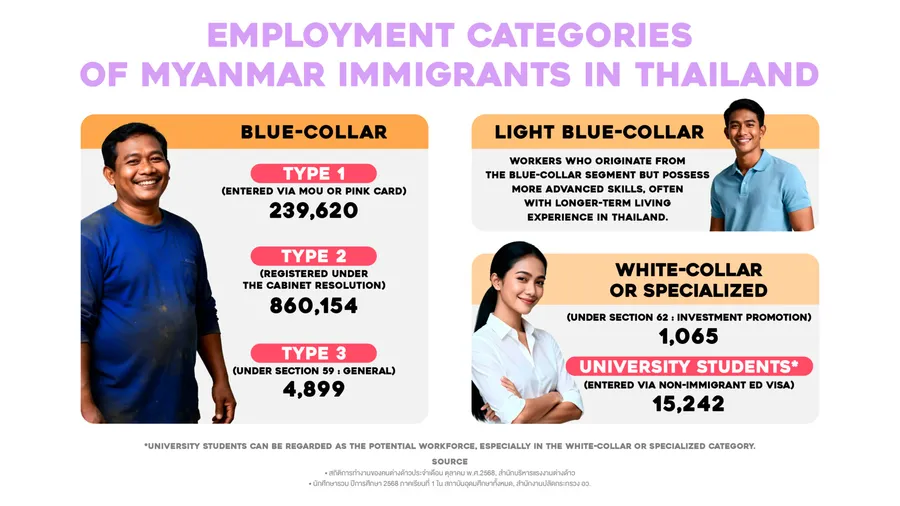
The Myanmar population in Thailand is more diverse than many may think and can generally be categorized into the following groups:
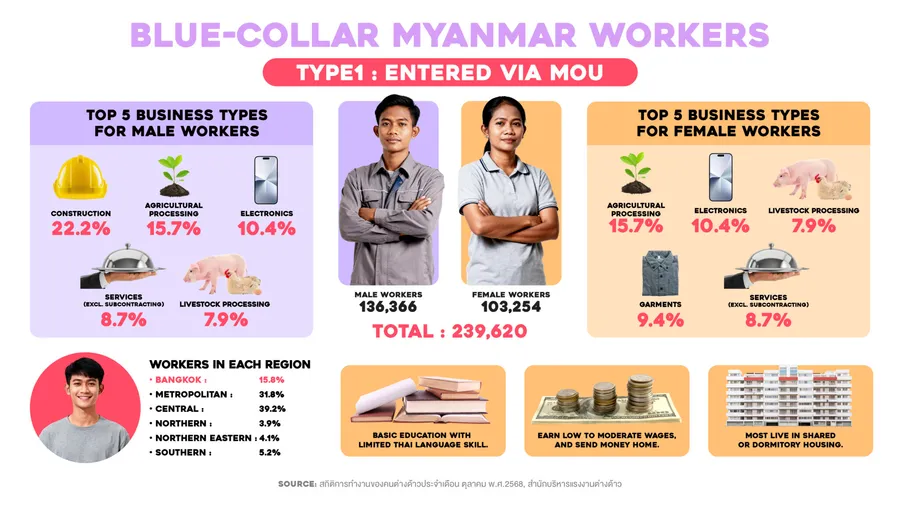
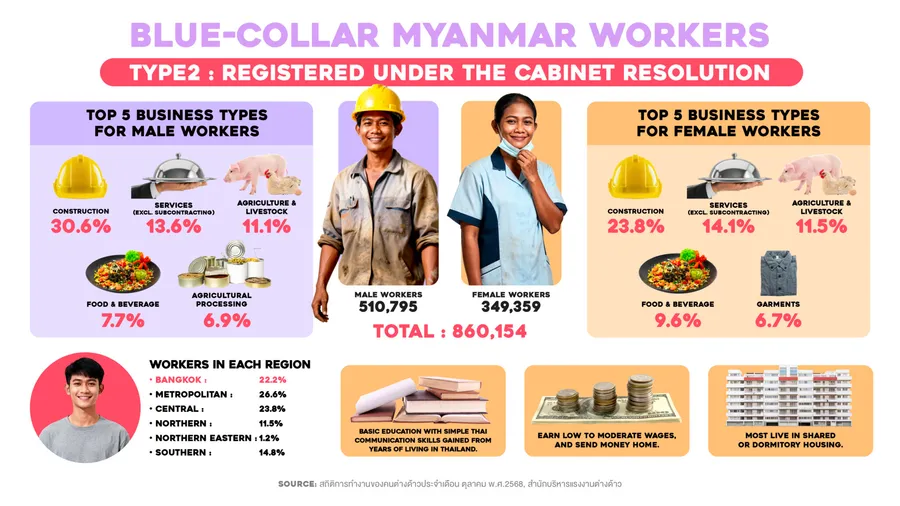
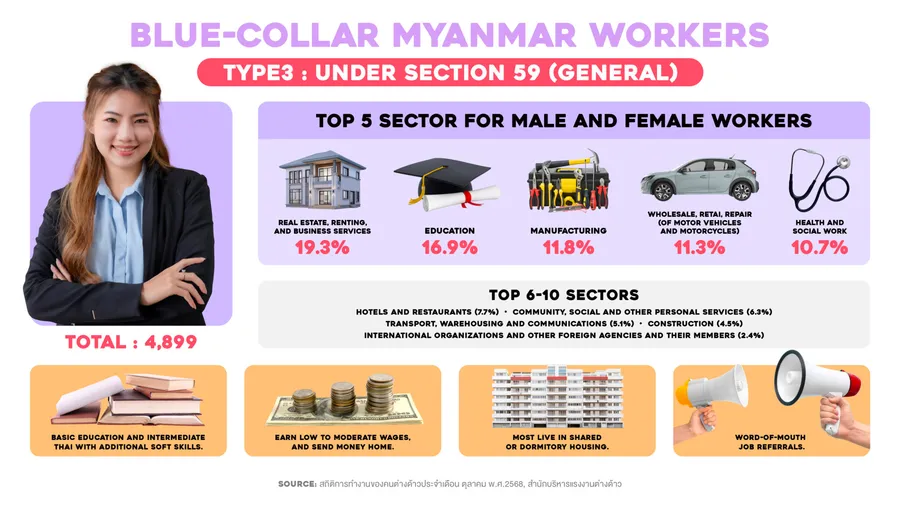
- Blue-Collar Workers — The largest segment, primarily employed in construction, agriculture, and fisheries.
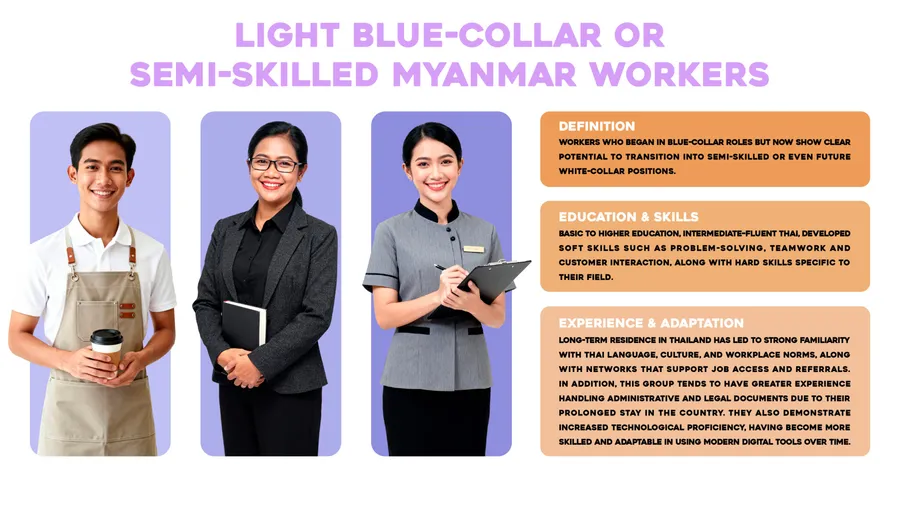
- Light Blue-Collar Workers — Individuals who have lived in Thailand for an extended period, developed specialized skills, improved their Thai language proficiency, and become more familiar with technology.
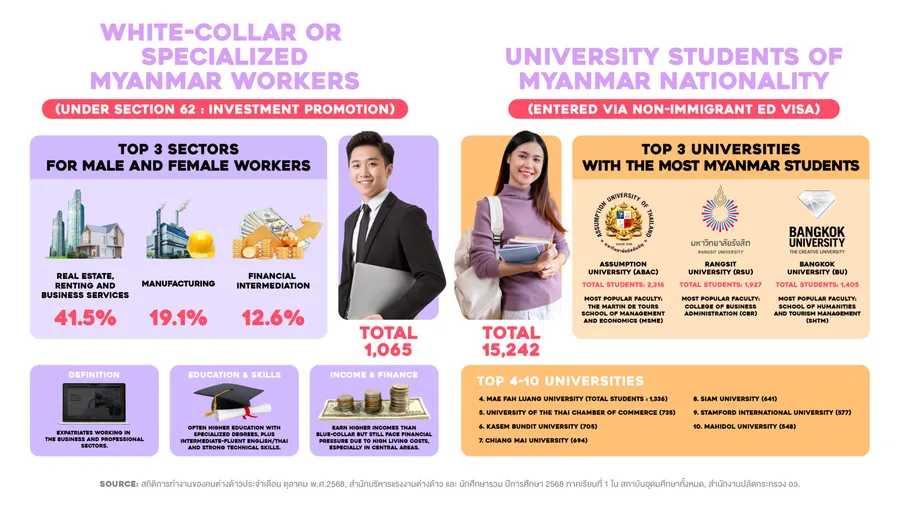
- White-Collar Workers & Students — There are more than 15,242 Myanmar students pursuing higher education in Thailand. Popular universities among this group include ABAC, Rangsit University, and Bangkok University.
2. Spending Behavior: Where Does Every 100 Baht Go?
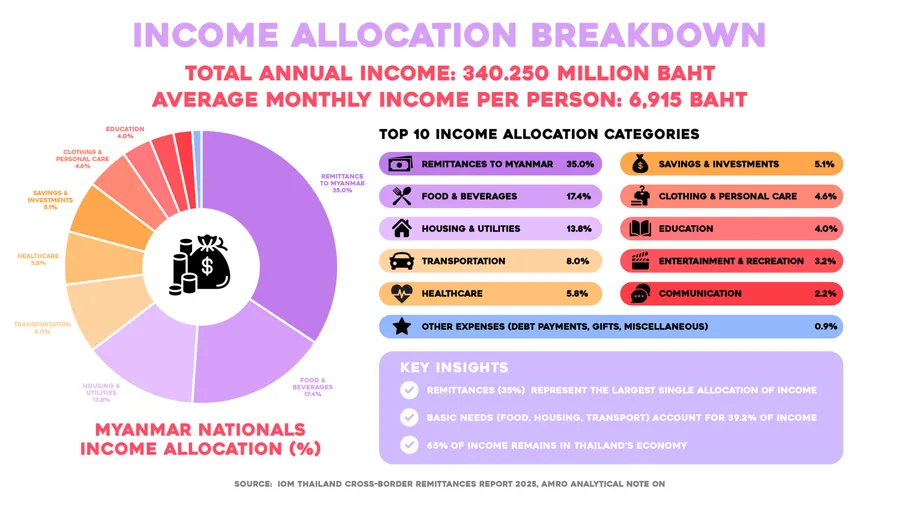
The average monthly income of this group is approximately THB 6,915. While this may seem modest, their combined spending power across the country represents a significant economic force. Key spending allocations include
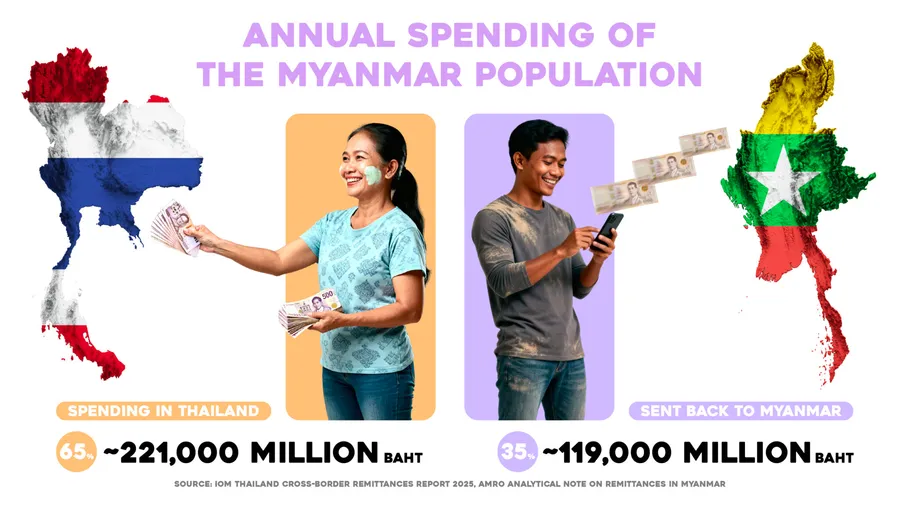
- Remittances (35%) — Cross-border money transfers sent back home.
- Domestic Spending in Thailand (65%) — Money that flows directly into Thai businesses.
- Food & Beverages (17.4%) — The largest spending category.
- Housing & Utilities (13.8%) — Most individuals live in dormitories or shared accommodations.
- Clothing & Personal Care Products (4.6%) — Consumer goods and daily necessities.
3. Market Opportunities Worth Watching
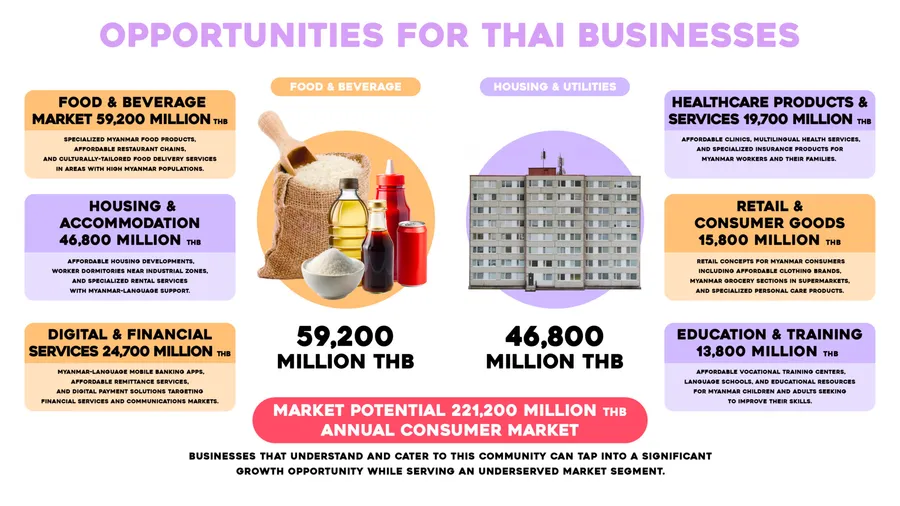
Based on spending patterns, the report identifies five industries with strong growth potential
- Food & Beverage (THB 59.2 billion) — Myanmar local products and restaurants offering flavors familiar to Myanmar consumers.
- Housing (THB 46.8 billion) — Accommodation near industrial zones with Myanmar-language support services.
- Digital & Financial Services (THB 24.7 billion) — Money transfer applications, banking apps, and SIM cards that support the Myanmar language.
- Healthcare (THB 19.7 billion) — Clinics with interpreters and affordable health insurance options.
- Retail (THB 15.8 billion) — Value-focused clothing, beauty, and personal care brands.
4. The AIBRA Marketing Strategy: Connecting with Myanmar Consumers
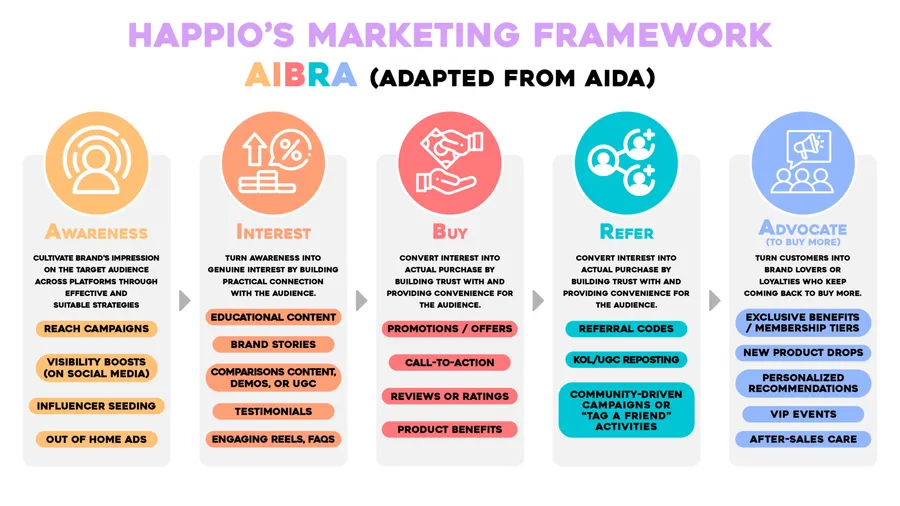
For brands looking to penetrate this market, Happio recommends the AIBRA Framework to drive sustainable growth
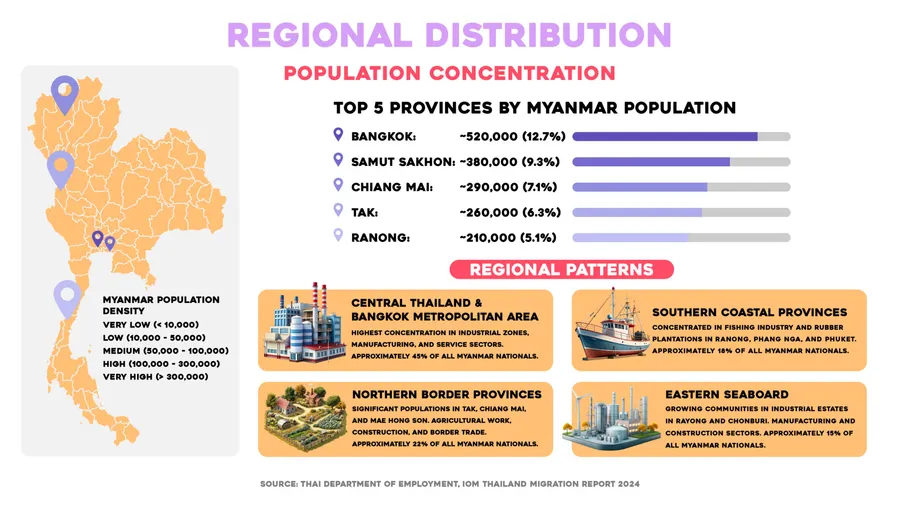
- Awareness — Build brand awareness through Myanmar influencers and Out-of-Home (OOH) advertising in areas with high Myanmar populations, such as Samut Sakhon and Chiang Mai.
- Interest — Create educational content and compelling brand stories that resonate with the audience.
- Buy — Offer clear promotions and convenient purchasing channels.
- Refer — Leverage word-of-mouth marketing and community-driven activities.
- Advocate — Turn one-time customers into loyal brand advocates through membership programs and VIP events.
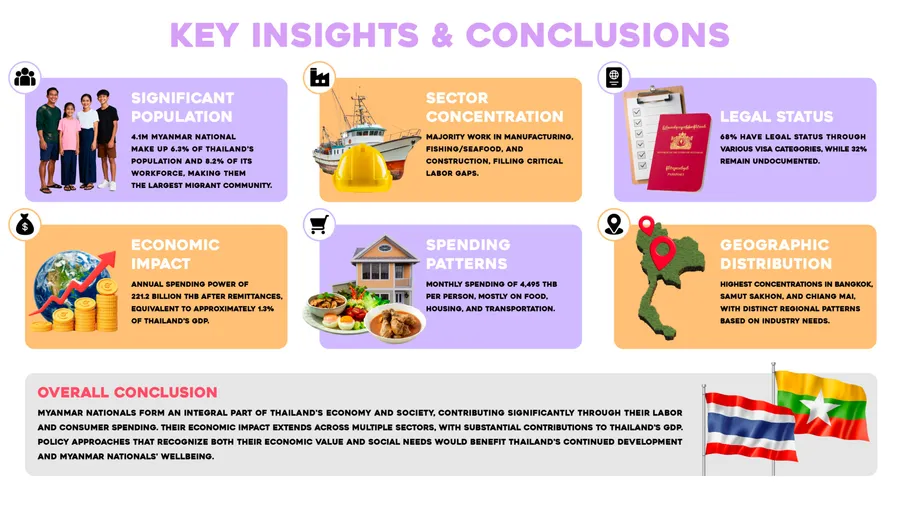
The Myanmar market in Thailand is no longer an “alternative” market—it is a core market with significant growth potential. Businesses that understand consumer behavior, communicate in a language their audience understands, and deliver relevant value will be well-positioned to unlock opportunities within this THB 200 billion market.
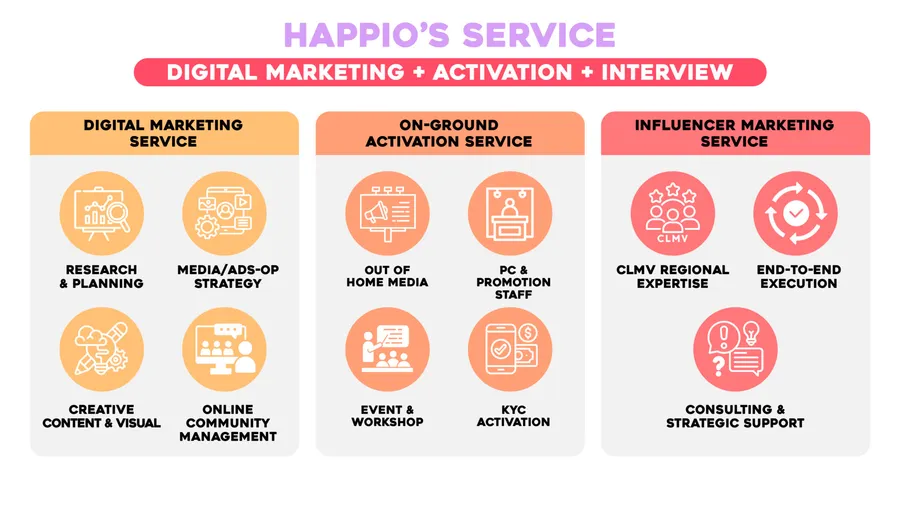
Interested in entering the Myanmar market in Thailand professionally? Contact Happio, a Creative Digital & Activation specialist that helps brands grow confidently across the CLMV market. Visit happioteam.com for more information.